

We often think imbalance begins outside us. A tense meeting, a rushed morning, a hard message, a home full of noise. Yet in our experience, the outer event is only part of the story. What unsettles us most is the way that event enters our inner system, touches old emotions, and shapes our next choice.
Self-reflection rituals help us notice what is happening inside before inner disorder turns into outer conflict.
When we speak of daily systemic balance, we mean the living balance between thought, emotion, body, relationships, and action. If one part is ignored, the others react. We may become sharp with someone we care about. We may say yes when we mean no. We may carry stress from work into dinner, then wonder why the whole day feels heavy.
This is why small rituals matter. Not grand gestures. Not long retreats. Small acts, done with honesty, that bring us back to ourselves.
Why rituals restore inner order
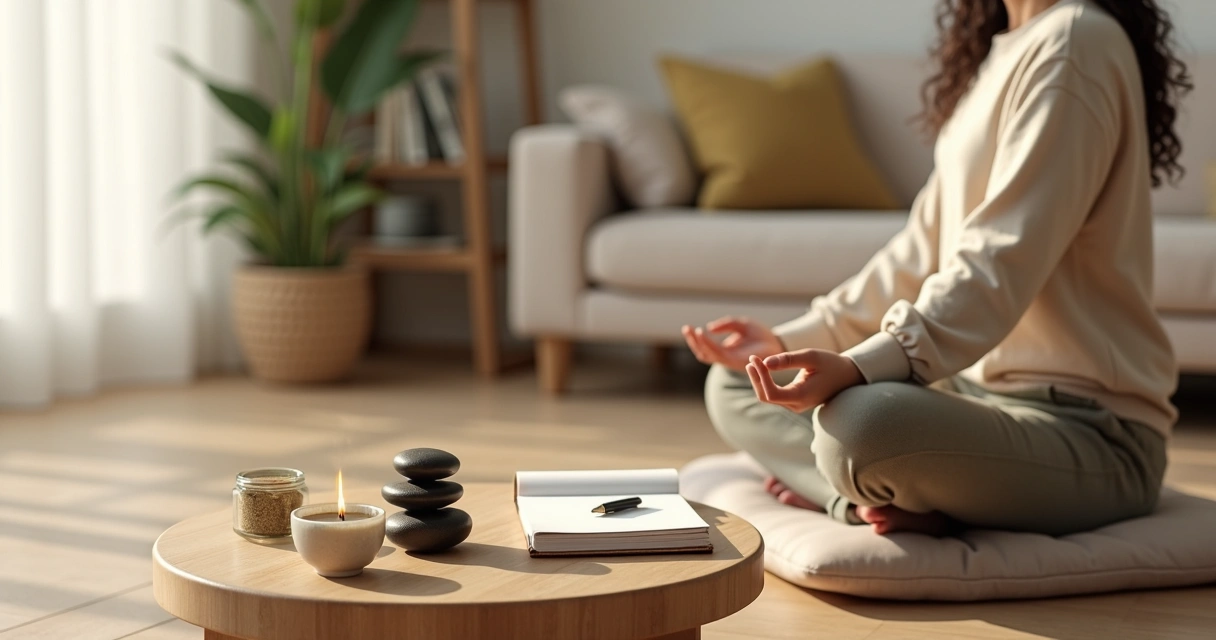
A ritual is more than a habit. A habit can be automatic. A ritual has presence. It gives shape to attention. It creates a pause where we can see what we are carrying, what belongs to today, and what is left over from yesterday.
We have seen how a person can change the tone of a whole room after two quiet minutes of reflection. The face softens. The breath drops. The reaction weakens. Something settles.
What we do not examine tends to lead us.
This is also why reflective practices have grown so much in daily life. Data on meditation and mindfulness effectiveness and safety reports that the share of U.S. adults who practiced meditation rose from 7.5% in 2002 to 17.3% in 2022. We think this rise says something simple. People are searching for ways to regulate themselves in a fast and fragmented world.
Balance is not the absence of pressure, but the presence of inner alignment during pressure.
Morning rituals that set the system
The morning has a quiet authority. It often sets the emotional tone for the rest of the day. If we begin by rushing into noise, we borrow agitation before we have even chosen our direction.
A useful morning reflection ritual can take five to ten minutes. What matters is consistency and truth.
We suggest three steps:
Pause before screens. Sit upright, breathe slowly, and notice the state you woke up in.
Name the inner weather. Ask, "What is present in me today?" Tiredness, hope, pressure, resentment, calm. Use plain words.
Set one relational intention. Choose how you want to affect others today. Clear, patient, firm, open.
This kind of start is simple, but it changes how we enter work, family life, and decision making. Instead of beginning in reaction, we begin in contact.

Midday rituals that interrupt accumulation
Many people do well in the morning and lose themselves by noon. This is common. By the middle of the day, interactions, tasks, delays, and silent frustrations start to pile up. Without reflection, the system hardens.
We like midday rituals because they stop accumulation before it becomes spillover. One short reset can prevent an entire evening of irritation.
Here are a few options that work well together:
Step away for three minutes of slow breathing.
Write one sentence that starts with, "Right now I am carrying..."
Place a hand on the chest or abdomen and check if the body feels tight, numb, rushed, or steady.
Ask, "What am I about to pass on to others if I do not reset?"
That last question can be uncomfortable. It is also honest. Sometimes what we call a bad day is really unprocessed tension moving from one person to the next.
A midday ritual protects relationships by stopping emotional residue from becoming behavior.
Evening rituals for closure and repair
The end of the day should not be only collapse. It can also be a time of repair. Evening reflection helps us close loops, release what is not ours to keep, and learn from the day while memory is still fresh.
We once heard someone say that they feared silence at night because it forced them to face their own unfinished feelings. Many people know that feeling. Yet once reflection becomes gentle and regular, evening silence stops feeling like a threat.
A strong evening ritual may include these prompts:
Where was I true to myself today?
Where did I react instead of respond?
What conversation still lives inside me?
What can I release before sleep?
You may also write a brief repair note for the next day. Not a full speech. Just a line such as, "I need to speak more calmly with my colleague," or, "I need to tell my family what I actually felt."
This gives the mind closure. It also gives the heart direction.

How to keep rituals honest
There is a risk in all inner work. We can turn it into performance. We can say the right words and still avoid the truth. A ritual only restores balance when it includes real contact with what we feel and how we affect others.
To keep reflection honest, we can follow a few simple rules:
Use plain language, not polished language.
Stay with one clear feeling instead of listing ten vague ones.
Link the inner state to one outer action.
Do not force peace. Notice what is real first.
Some days reflection will show calm. Other days it will show envy, fear, impatience, or grief. That is not failure. That is contact. From contact comes choice.
When a ritual starts to work
How do we know a self-reflection ritual is helping? Usually the signs are quiet at first. We interrupt ourselves sooner. We become less eager to blame. We notice our tone before speaking. We recover faster after stress. We stop exporting our confusion into every room.
Awareness changes consequences.
That is the deeper value of these rituals. They do not remove life’s tension. They help us meet tension without spreading disorder. Day by day, that changes the system we live in, because every system is shaped by the quality of human presence inside it.
Conclusion
Self-reflection rituals restore daily systemic balance by bringing order back to the place where disorder begins. In thought, in emotion, in intention, and in the link between inner state and outward effect. We do not need long hours to begin. We need sincerity, rhythm, and a willingness to pause before reaction becomes pattern.
Small daily reflection rituals can turn scattered days into conscious days.
If we practice in the morning, interrupt accumulation at midday, and close the day with repair at night, we build a steadier way of living. Not perfect. But more aware, more responsible, and more aligned with the kind of impact we want to have.
Frequently asked questions
What is a self-reflection ritual?
A self-reflection ritual is a repeated moment of conscious pause in which we observe our thoughts, emotions, body state, and recent actions. It can include journaling, quiet breathing, or asking a few honest questions. What makes it a ritual is the presence and regularity behind it.
How do self-reflection rituals help balance?
They help balance by showing us what we are carrying before it shapes behavior. When we notice tension, sadness, anger, or confusion early, we can respond with more clarity. This reduces inner overload and helps us relate to others with more steadiness.
How often should I practice these rituals?
Daily practice works best for most people, even if each ritual is brief. Five minutes in the morning, a short midday reset, and a few minutes at night can be enough. The value comes from rhythm, not length.
What are the best self-reflection exercises?
Some of the best exercises are simple and repeatable: mindful breathing, journaling with one prompt, body awareness, naming the dominant feeling of the moment, and reviewing one interaction from the day. The best exercise is the one we can do with honesty on a regular basis.
Can self-reflection improve daily wellbeing?
Yes. Self-reflection can improve daily wellbeing by helping us regulate stress, understand emotional patterns, and act with more intention. Many people feel calmer, clearer, and less reactive when reflection becomes part of daily life.