


Finding a method to quiet the mind and help us reconnect with our deeper self can change how we see our life and our place in the world. In our experience, the practice of Marquesian meditation is a clear, practical response to that search, inviting presence, coherence, and a deeper sense of responsibility for our own internal reality. For many of us, the idea of meditation may sound abstract, but with steady practice at home, its real effects on emotions, relationships, and choices soon become visible. With this guide, we want to share a way to start.
Why choose Marquesian meditation?
We have witnessed how this approach goes beyond simply calming thoughts. It helps foster clarity, honest self-inquiry, and a gentle but real alignment with our best intentions. Marquesian meditation unites body, emotion, thought, intention, and consciousness in a simple, accessible practice. The method is structured but gentle, which is why it's suitable for people starting or deepening their meditative path.
Marquesian meditation helps us turn silence into an active field of transformation, not emptiness but possibility.
Getting ready for your practice
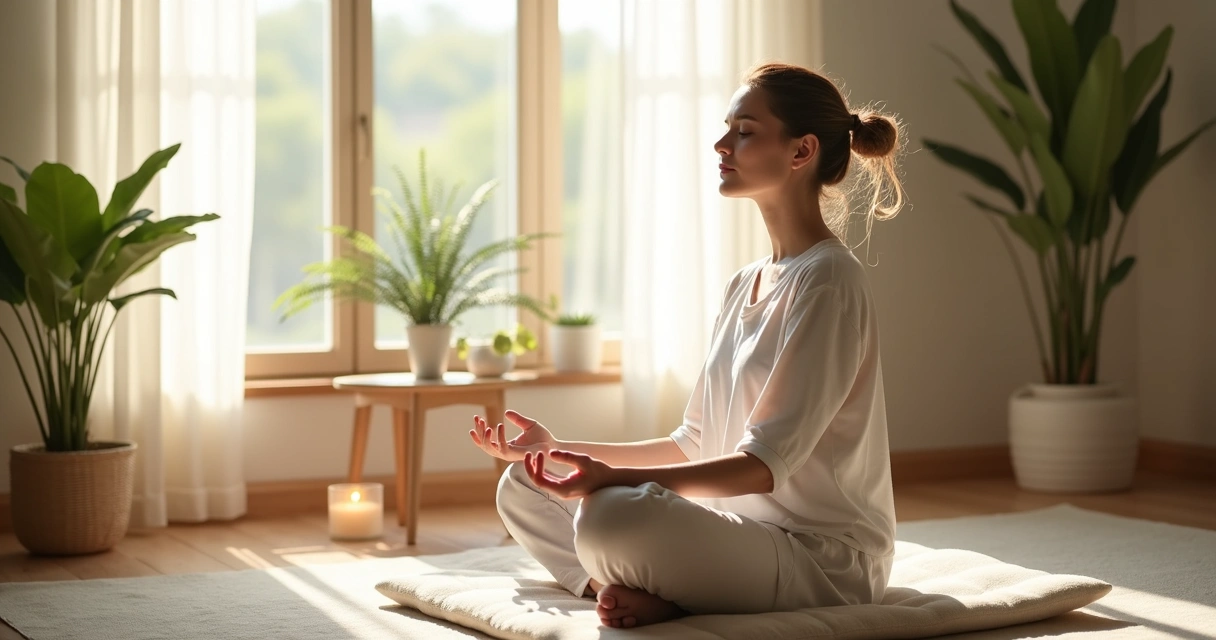
Before starting, let us consider how to set up a supportive home environment. This is not only about finding a quiet spot; it's about creating a space that communicates respect for yourself and your internal journey. A small routine can help:
- Choose a time with minimal interruptions, often early mornings or evenings.
- Pick a spot where you feel comfortable, safe, and undisturbed.
- Arrange a cushion or chair. Back support is valuable. The idea is comfort, not strain.
- Turn off digital distractions, if possible. Silence your phone or leave it in another room.
- Personalize your space with a small symbol of intention—a candle, a plant, or an object you value.
Try to stay open to simple rituals. Perhaps washing your hands or taking a few slow breaths before sitting down. Over time, these small acts tell your mind and body: “Now, we meditate.”
Understanding the stages of Marquesian meditation
The method is structured in four ordered stages. Each builds upon the one before. In our guidance, we encourage you to move through them slowly, especially when starting. Here is the structure:
- Presence and body awareness – Grounding in the present moment, starting with the body.
- Emotional recognition – Identifying and naming current emotions without judgment.
- Observation of internal narratives – Attending to thoughts and stories running mentally.
- Intention and conscious direction – Bringing a chosen, coherent intention to mind and letting it guide your presence.
This progression forms the heart of the technique. Let's go through each one in practical detail, so you can follow along at home, step by step.
Step one: Presence and body awareness
Sit comfortably, with your back upright but not rigid. Close your eyes, or soften your gaze. Begin by noticing your breathing—do not change it, simply feel it move in and out.
Allow your attention to travel through each part of your body, from head to toes. Notice sensations, weight, temperature, tightness, or ease. If your mind wanders, gently bring it back to the sensation of sitting.
Notice the body as it is, not as you want it to be.
We find that this first stage can be both calming and grounding. After a couple of minutes, there is often a quiet shift—restlessness gives way to stillness, and you become more present to yourself.
Step two: Emotional recognition
Now, turn your attention inward. What emotion is present? Scan gently through your chest, throat, stomach, and face. Name any feeling you discover, such as calm, tension, curiosity, or worry.
In our observation, simply naming an emotion reduces its intensity, allowing you to relate from awareness instead of unconscious reaction.
The goal is not to “fix” or reject what you feel. Just notice it. Accept that emotions flow and change—this is true for all of us. Stick with this step for a few minutes, until you sense a clearer distinction between “the emotion” and “the one who notices.”
Step three: Observation of internal narratives
As emotions settle, you’ll likely notice thoughts—ideas, judgments, or stories about yourself, others, or your day. Watch them appear, move, and fade, much like watching clouds drift across the sky.
Pay special attention to the tone of these narratives. Are they critical, anxious, hopeful, or neutral? Do they repeat certain themes? The key here is to observe, not argue or resist.
“A thought is not a fact—just an event in the mind.”
If you get caught in a stream of thoughts, gently return to the act of observing. This practice, we have learned, is a training of mental freedom. It helps develop a sense of space between who you are and what you think, opening possibilities for new choices.

Step four: Intention and conscious direction
Having settled into presence, named your feelings, and noticed your thoughts, now bring a chosen intention to the forefront of your mind. This could be:
- “I choose to be kind with myself right now.”
- “I am present and open.”
- “I witness my experience without judgment.”
- “I commit to bringing calm into my interactions today.”
Repeat your intention inwardly a few times. Sit with the feeling this intention creates. Imagine it flowing through your breath and your body. If the intention wavers, gently return to it. We find that this turns meditation into an act of conscious creation, not just observation.
Finishing your practice
To close, become aware again of your surroundings—the sounds in the room, the weight of your body, the space you are sitting in. Move your fingers and toes, and when you are ready, open your eyes.
Many people like to take a final moment of gratitude, or to journal a word describing their state. This can help integrate what you discovered during your meditation, so you carry it with you through the day.
Tips for making it a habit
Building a practice takes patience. Here are ways we have seen people make it easier on themselves:
- Start small: 7-10 minutes is enough when beginning. Over time, 20-30 minutes can feel natural.
- Choose regular days and times. Consistency helps the mind form a new pattern.
- If you miss a day, come back the next. Self-compassion is at the heart of this practice.
- Share your intention with someone you trust. It supports accountability without pressure.
- Reflect every few weeks: How does the practice affect your mood, your patience, or your relationships?
Presence is a skill—every moment you practice, it grows a little stronger.
What to expect as you continue
With time, most people notice little shifts: a pause before reacting, a gentler dialogue with themselves, clarity in moments of stress, or a renewed willingness to be honest. These are real transformations. Over weeks and months, a steady meditation practice becomes less about escape and more about being fully present, even when life is uncomfortable.
We believe that small, daily moments of conscious presence can change not just your mindset, but your daily choices and relationships too.
Conclusion
Practicing Marquesian meditation at home is about paying attention—to the body, the emotions, the mind, and our deepest intentions. It is not complicated but it does require honesty and patience. What we consistently observe is that making time for inner work soon brings concrete results, both inside and outside. You do not need special conditions or perfection, just a willingness to begin and to meet yourself where you are, every day.
Frequently asked questions
What is Marquesian meditation?
Marquesian meditation is a contemplative practice structured in four stages: presence and body awareness, emotional recognition, observation of internal narratives, and setting a conscious intention. Its aim is to create a deep sense of presence, self-understanding, and internal coherence, linking inner awareness with choices and actions.
How to start Marquesian meditation at home?
Choose a quiet and comfortable place, sit with your back straight, and move through the four stages step by step. Begin with the body, then your feelings, thoughts, and finally intention. Short, regular sessions are more helpful than infrequent long ones.
What do I need to practice Marquesian meditation?
You need a quiet space, a comfortable seat, and an open attitude. There’s no need for special gear; just enough room to sit with support for your back, and a few minutes where you won’t be disturbed. Small supportive objects, such as a cushion or candle, are optional but welcome.
How long should I meditate each day?
We suggest starting with 7-10 minutes daily, increasing as you feel comfortable. The key is consistency, not duration. With experience, many people find 20-30 minutes to be a pleasant amount.
Is Marquesian meditation suitable for beginners?
Yes, this method is designed for clarity and simplicity, making it well-suited for beginners. The structure guides you step by step without pressure to “empty the mind,” instead focusing on gentle awareness and intention. All levels can benefit, but the approach is friendly for those starting out.